
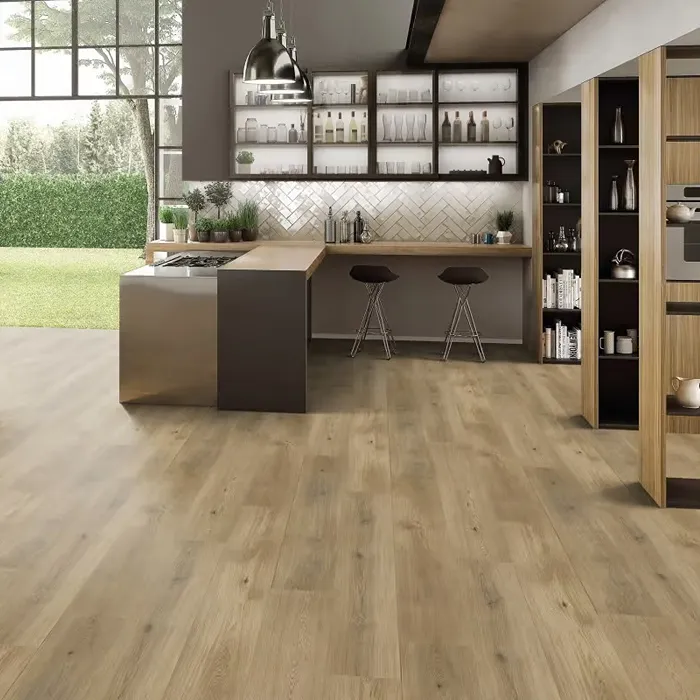
Dubai's homes present unique waterproofing challenges. From humid summer months and high-pressure shower rooms to kitchen spills and the occasional water pipe issue, any flooring in or near wet areas needs to be genuinely waterproof — not just moisture resistant. Understanding the difference is critical.
Waterproof vs Water Resistant — The Critical Difference
Waterproof means the core material itself does not absorb water and will not be damaged by prolonged exposure. LVT, vinyl, and ceramic tile are genuinely waterproof throughout their entire thickness.
Water resistant means the surface can handle brief water exposure but the core can still absorb moisture over time. This includes many laminates marketed as "moisture resistant" — they should still never be used in wet areas. The surface melamine coating resists splashes, but water entering the joint edges will swell the HDF core permanently.
In Dubai's conditions — where high summer humidity, condensation from AC units, and kitchen and bathroom moisture are constant considerations — only truly waterproof flooring should be installed in or adjacent to wet areas.
The Best Waterproof Flooring Options for Dubai
1. LVT (Luxury Vinyl Tile) — Best All-Round Choice
LVT is our top recommendation for any wet area in Dubai. Its 100% PVC core is completely impervious to water. It replicates wood and stone beautifully with photorealistic printing and embossed-in-register textures, is warm and comfortable underfoot compared to tile, and is easy to install and maintain. Starting from AED 55/m² fully installed.
Best for: Bathrooms, kitchens, laundry rooms, hallways, whole-apartment installation for consistency
2. SPC Vinyl Plank — Ultra-Stable Core
Stone Plastic Composite (SPC) vinyl plank flooring has an even more rigid core than standard LVT, making it extremely stable under temperature fluctuations — perfect for Dubai spaces with dramatic air conditioning cycles. The rigid core also bridges minor subfloor imperfections better than flexible LVT. Slightly more expensive but outstanding performance for large open-plan areas.
Best for: Large living areas where dimensional stability under temperature change is important
3. Ceramic and Porcelain Tile
The traditional waterproof choice for Dubai bathrooms and kitchens. Tile is genuinely waterproof and extremely durable when properly installed. However, it is cold underfoot, harder and less forgiving when objects are dropped, noisier, and grout lines require regular cleaning. Many Dubai homeowners now choose LVT over tile specifically for its warmer feel and easier maintenance.
Best for: High-end bathroom feature walls, en-suite floors where stone aesthetics are prioritised
Room-by-Room Waterproof Flooring Guide for Dubai
| Room | Recommended | Why |
|---|---|---|
| Bathroom | LVT or Tile | 100% waterproof essential |
| Kitchen | LVT | Waterproof + comfortable underfoot |
| Laundry Room | LVT or Tile | Potential machine leaks and humidity |
| Hallway | LVT | Water tracked in from outside |
| Living Room | LVT or Laminate | Either suitable in dry areas |
| Bedroom | Laminate or LVT | Dry area — choose on budget/aesthetics |
| Balcony | Outdoor tile or Decking | Must handle UAE exterior UV and heat |
Installation Tips for Waterproof Flooring in Dubai
Even waterproof LVT needs to be installed correctly to remain effective over time:
- Ensure the subfloor is level, dry, and free of contamination before installation
- For dryback LVT: use appropriate adhesive with full contact coverage (no voids)
- For click-lock LVT in wet areas (bathrooms, showers): seal all expansion gaps at walls and bath surrounds with sanitary-grade silicone
- Allow adequate expansion gaps around the perimeter to accommodate temperature-related movement
- Never install LVT over a subfloor with active moisture rising from below — address the moisture source first
- Ensure door thresholds and transition strips are properly sealed at all wet-to-dry area junctions
The Cost of Getting It Wrong
Installing the wrong flooring type in a wet area in Dubai is expensive. Swollen laminate boards in a kitchen cannot be repaired — they must be completely replaced, including removing and refitting all furniture and appliances. The cost of replacement typically far exceeds any saving made by choosing non-waterproof flooring in the first place. LVT's slight price premium over laminate pays for itself entirely if it saves one kitchen flood scenario.